Wednesday, August 18, 2010

Origin of the Holland Lop


Origin of the Holland Lop

By Phil Batey

Ruskin Miniature Lops

**Note: in the UK the Holland Lop is a Miniature Lop**

Adrian was a very unassuming man and very few photographs were ever taken of him. Below is a very rare glimpse at the Man & Legend who is Adrain de Cock with on of his 'Madagascar Bucks' The Miniature Lop was the brain child of Adrain de Cock of Tilburg, Holland in the late 1940's. His vision was to produce a small, miniaturized version of the French Lop. This Giant of breeds was very popular all over Northern Europe with both exhibition keepers and meat producers alike.

Adrain de Cock with on of his 'Madagascar Bucks'

The Nederlandse Hangoor Dwerg as it is known in Holland - which translated means - Dutch Little Hanging Ear - was a work in progress for Adrian over many years. His first attempt to breed this 'new lop' was in 1949 when he took a French Lop buck and mated it to a Netherland Dwarf doe. The Netherland had been a very successful and popular 'miniaturization' for the Dutch some years earlier and was in some way the inspiration that Adrian took for his new, small lop breed.

The mating between the French Lop buck and Netherland doe was not as successful as Adrian had hoped. The babies were born abnormally large and died from being crushed at the time of birth. The doe later suffered fatality also. Disheartened with his new project, Adrian decided not to progress this any further. However, in 1951 Adrian was talking to another fancier about his vision for a Smaller Lop breed and was persuaded to try again, this time taking the other option of using a French Lop doe and a Netherland Dwarf buck. Adrian had thought of this option back in 1949 but had not imagined that the small Netherland male would be able to mate with such a large framed lady.

There are no records that show how this mating was carried out. Imagination can only be used as to how a little buck managed to mate such a big female. I think we must also at this time remember the old saying 'where there's a will there's a way'. The mating was a success and the resulting litter was born in July 1951. There were six babies in total, all agouti and all survived. Adrian had his first generation Hangoor Dwerg's. All the babies were retained and when the time came to start the next generation a Sooty Fawn English Lop was introduced.

The ear carriage on the F1's were all erect (contrary to Adrian's belief that they would be lopped) and another direction had to be set. As the French Lop was a step backwards, being of much larger size to the youngsters, the English Lop was the next option. Slightly smaller than the French but with much bigger ears - and never a problem with lopping - Adrian decided to mate one of the young does to a Sooty Fawn buck owned by a friend. The mating took place in February of 1952 and the resulting litter of F2's was born in the March.

The litter was not large, with only three youngsters born, but the visual change from the F1's was evident. As the litter got older, the ears started to fall and when the litter was 5 months old the ears were all lopped. Measurements of the ears were taken at this stage and measured 12cm from tip to tip. They were weighed at this time as well and the smallest youngster in the litter weighed 3.5kg (7lb 7oz) Adrian was exceptionally pleased with this litter as they were far better than he had hoped for at such an early stage in the development of his 'brain child'.

From this litter of F2's does were mated back to F1 bucks and F1 does to the F2 buck with resulting litters in all matings. His third generation (F3) were coming on well, and the ear carriage was improving - the ears now hanging closer to the head - and resembling more that of the French Lop used in the initial mating.

From the years 1953 to 1955, Adrian developed these lines further and produced generation after generation - getting smaller with each litter. By the end of 1955 Adrian had a variety of colors on the go (mainly Sooty Fawn) and the weight of these animals had reduced to under 3kgs, His job now was to get the Dutch Rabbit Club to acknowledge their existence by accepting them as a recognized breed. This was to prove more difficult than he had first imagined. It took a further 8 YEARS of breeding, distributing stock to other interested breeders and promotion of this breed until finally in 1964 they were accepted for standardization by the Dutch authorities.

The breeds popularity throughout Holland prospered and soon became a common sight on the show benches of other countries across Europe. In 1970 an application was made by the parent club in Holland to reduce the weight once again, this time to 1.5kg. This was duly accepted and is the maximum weight that breeders still work with today. This speaks volumes for the grit and determination of the Dutch Fanciers. For 33 years their standard maximum weight has remained the same and they have continued to produce the best specimens seen any where in the world. The breed may have traveled far and wide over the globe and so has the outline of the standard, but from country to country this has been changed slightly. Here in the UK the rabbits originally imported in 1970 were of the 1.5kg standard but as the rabbits got bigger, the type got better and we changed our standards to fit the rabbits, NOT breeding the rabbits to fit the standard.

Friday, August 13, 2010

Vitamin for rabbit, hamster,rat, mouse & small animals

Bengy Vitamin for rabbit, hamster, rat, mouse & small animals

indication:
Help to ballance the requirements of vitamins and to avoid diarrhea, comfortable for stomach so that your pet always stay in tame condition.

By using this multivitamin, it help to avoid sickness (Provided consume regularly)

usage:
Mix every four caps with 30ml of water.

storage:
Keep lit close and store in cool dry place.
No refrigeration necessary.

120ml/bottle

RM5/bottle

call/sms:
shah - 013-3805979

Le salon Nail Scissors

Le salon Claw Scissors
for sharp and precise nail cutting & easy to use
Direction:
Inspect nails to locate the blood vessel (the "quick"). On light colored nail, the quick is found at the border (base)portion of the nail, it is pink and easy visible. On dark nails trim only the tips of the nails. Press thumb above the claw, holding skin & fur out of the way to prevent the claw from withdrawing into the sheath. Place nail in groove in scissors and cut in one smooth stroke. regular nail clipping will cause the blood vessel to retreat overtime, reducing risk of accidental bleeding. Always keep a cautery substance on hand while trimming to stop bleeding, if necessary.
Size : S (RM12)
size : L (RM14)
Product from :HAGEN
call/sms :
shah - 013 380 5979

Sunday, August 1, 2010

FFM Rabbit Grower Pellets


FFM Rabbit Grower Pellets(5910)


Makanan membesar arnab (Premium Quality Feed)

~highly palatable and nourising
~ensure optimum health and groth rate
~improve survival rate

crude protien - 17%min
crude fat - 2% min
Crude fibre - 20% max
moisture - 13% max
phosporus - 0.5% min
calcium - 0.8-1.5%

ingredients:
soyabean meal, sesame meal, pulses, By-product of
pulses leaf meal, canora meal, oat polard, maize,
wheat, wheat pollard, wheat bran, rice bran, PKC,
Copra cake, molasses, crude palm oil, limestone,
salt, dicalcium-phosphate

vitamins, trace minerals, amino acids, probiotics,
antioxidants, anti-mold agent, antimicrobials,
flavours

Gross weight : 25kg/bag

Price : RM70/bag

loc. putrajaya
call/sms : shah (013-3805979)

Friday, July 16, 2010

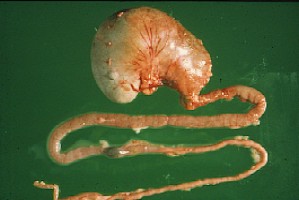
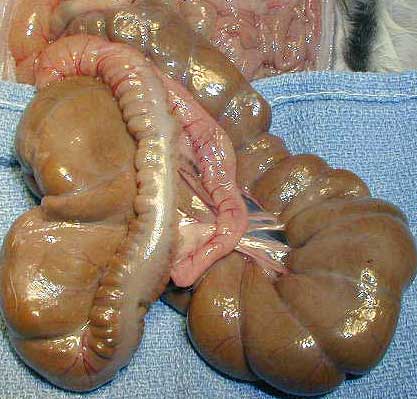
Penyakit Arnab 1: Tabiat Makan Bulu & Hairball


Fur eating and hairballs
Sebilangan Rabbit direban mungkin akan memakan bulu badan, bulu kening & misai.Seekor rabbit akan mula memakan bulunya sendiri dibahagian tepi,belakang & dada. Ini desebabkan secara umumnya oleh 'deficiency of dietary fiber and gastricatony'. Diet yang tinggi dengan bijirin dan rendah kandungan alfalfa cenderung untuk kandungan rendah serat @ Fiber. Ini kerana sistem penghadaman seekor rabbit adalah untuk menampung sejumlah besar serat untuk penghadaman. kekurangan serat dalam diet harian akan membuatkan rabbit akan cuba mencari sumber fiber yang lain dan mula memakan bulu rabit itu sendiri.
Dengan menambahkan jumlah serat dalam diet harian rabbit akan selalunya menghilangkan masalah memakan bulu ini. Kesesakkan didalam satu sangkar atau kawasan juga akan menyebabkan kehilangan bulu rabbit, terutama sekali disebabkan pergaduhan sesama rabbit.
Rabbits juga akan termakan sejumlah kecil bulunya melalui jilatan @ membersihkan diri sendiri. Bulu ini akan bergumpal didalam perut rabbit lalu membentuk 'hairballs'@ 'Wool Black'. Ini selalunya tidak akan menunjukkkan apa apa kehadiran penyakit, tetapi ianya akan menjadi halangan didalam perutnya. Apabila terdapat halangan pada saluran perut, rabbit akan mula untuk berhenti makan, berat badan susut, dan berkemungkianan mati. Jika masalah hairbaill ini hadir, antara yg boleh dilakukan adalah dengan memberikan sedikit buah nenas dalam diet rabbit yang sakit @ pemberian 10ml jus nenas. Enzim didalam juice ini akan membantu untuk meleraikan hairball dan membantu untuk melepasi sistem penhadaman rabbit. Pembedahan mungkin diperlukan bagi sesetengah kes.

Kesimpulan yang dapat dibuat disini adalah, rabbit memerlukan kandungan fiber @ serat yang tinggi dalam diet harian mereka. Dengan adanya diet yang sempurna akan menjamin kesihatan rabbit- rabbit anda...


sumber: bacaan internet... dengan translation mudah... muehehehehhe

Next! : Penyakit Arnab 2: Sore Hocks
(insyaallah jika diizinkan olehNya.)

Wednesday, July 14, 2010

Rabbit World Fact

1 Cholesterol level in rabbit meat is much lower than chicken, turkey, beef, pork. (Alabama A & M University 1989)
2 Rabbit is lower in % of fat than chicken, turkey, beef, and pork. (U S D A circular # 549)
3 Unsaturated fatty acids is 63% of total fatty acids. ( Dr Reo)
4 Rabbit is highest in protein%. (U S D A circular # 549)
5 The office of home economics, state relations of the U S Department of Agriculture has made extensive test and have stated that domestic rabbit meat is the most nutritious meat known to man.
6 Rabbit meat is seasonal any month of the year and is especially recommended during the hot summer months, as it does not contain the heating properties of most all other meats.
7 Rabbit meat has been used and is suitable for special diets, such as those for heart disease patients, diets for the aged, low sodium diets, weight reduction diets, ect. ( Rabbit production Cheek Patton Templeton) Of course this is between you and your doctor. We do not make any recommendations of this type because we are not qualified.
8 Rabbit has 795 calories per pound. Chicken 810, Veal 840, Turkey 1190, Lamb 1420, Beef 1440, Pork 2050. ( U S D A circular # 549 )
9 A doe rabbit that weighs 10 pounds can produce 320 pounds of meat in a year. !!! WOW !!!. This is more than a cow and it takes 2 acres of land to raise a cow.
10 Rabbits will produce 6 pounds of meat on the same feed and water as a cow will produce 1 pound of meat on the same feed and water.
11 Baby rabbits feed of mothers milk so rich that they can double their weight in 6 short days as compared to a pig at 14 days, calves 47 days, and humans 160 days.
13 Rabbits are raised up off the ground and is one of the cleanest meat.
14 Rabbits are among the most productive of domestic livestock.
15 It was decreed by law in the Roman Empire that all young maidens be fed rabbit meat because it would make them more beautiful and more willing.
16 The first recorded rabbitry husbandry was in early Roman times, Where rabbits were kept in walled rabbit gardens for food. This saved waste over bigger animals because the rabbit was all eaten. there was no refrigeration.
17 Sailing vessels distributed rabbits on islands in various sea lanes to be used as a source of food by sailors.
18 In 1859 a single pair of rabbits was released in Victoria, Australia, and in 30 years gave rise to an estimated 20 million rabbits.
19 As the worlds human population grows there will be less land to raise food. The rabbit will play a more increasing role in this supply.
20 Rabbits lend themselves to both small and large scale production.
21 France is the world's largest producer and consumer of rabbit meat. In Hungary there are rabbitries with over 10,000 does producing rabbits for export to Italy.
22 Rabbit meat is all white meat.
23 Rabbit was the number 1 Export item of Red China.
24 Rabbit meat compares very favorably to veal at half the price.
27 Rabbits are known to be used for meat as far back as 1500BC
28.Some people use the heat from the rabbit's ears to heat green houses
29. Taken from the Domestic Rabbit magazine from the early 1990's rabbit manure
has the following percentages of dry material.
2.20% Nitrogen
.87% Phosphorus
2.30% Potassium
.36% Sulfur
1.26% Calcium
.40% Magnesium

Monday, July 5, 2010

New Tariff pos malaysia 1 julai 2010 & Dealer diperlukan di kawasan anda

berikut tarif baru oleh pos malaysia...
sy tidak lagi akan membuat penghantaran melalui pos untuk semua barang dan hay yg saya jual...
kerana agak tidak berbaloi untuk harga pembeli membeli barangan tersebut melalui pos

bagi penghataran melalui pos untuk pembelian berat barangan / bungkusan isipadu barang
melebihi 7 kg untuk semenanjung (min. pos fee. RM17.00 -pos darat/laut)
& 11 kg bg sabah & sarawak (min pos fee. RM58.00 - pos udara)


COD bagi produk arnabkus hanya bagi kawasan2 berikut :
desa putra, desa pinggiran putra, putrajaya , cyberjaya, serdang , bangi n sg ramal sahaja. harap maklum


bagi penjualan produk arnabkus di negeri lain.... dan lain2 kawasan, saya ingin mempelawa anda untuk menjadi pengedar dikawasan anda bagi barangan hay dari arnabkus.
hanya satu sahaja pengedar bagi setiap kawasan. Dealer price yg istimewa akan diberikan kepada pengedar yg berdaftar.**(TERTAKLUK PADA TERMA & SYARAT YANG DITETAPKAN)

bagi yg berminat boleh lah menghubungi saya melalui E-mail SAHAJA! : are_ril@hotmail.com

Tuesday, June 22, 2010

Cloudy Eye in Rabbits

Cloudy Eye in Rabbits

Cataracts
A cataract is an opaque film on the lens of the eye, and may mean the lens is entirely or only partially clouded. In most instances, cataracts are present at the rabbit's birth.

Symptoms and Types
* Lens is partially or fully opaque
* Eye discharge (hyper-mature cataract)
* Swelling of the iris
* White nodule-like bumps on the iris

Cataract types:
* Immature – lens partially covered


from petMD.com
* Mature – entire lens covered
* Hypermature – lens liquefaction has occurred


Causes
Cataracts are most commonly present at birth. However, it may develop spontaneously and with no known cause.

It occurs for many reasons, but is usually related to a bacterial infection (encephalitozoon cuniculi). Other causes include a nutritional deficiency or elevated levels of glucose in the blood. Cataracts may also develop spontaneously with no known cause.

Diagnosis
Cataracts are generally evident by the opaque (cloudy) appearance of the lens. The veterinarian may run tests if bacterial infection is suspected. Other analyses include a urine analysis to test for infectious disease and blood tests.

In cases where the rabbit has a white mass protruding from the eye, a sign which may indicate cataracts, alternate diagnoses may conclude an abscess in the eye or an unnatural growth of cells (neoplasia), such as a tumor in the eye.

Treatment
Surgery to remove cataracts is the primary treatment method, and can be performed on both congenital and spontaneous cataracts. The sooner the surgery is done, the better the prognosis. Various medications may also be prescribed, especially in cases of bacterial infection.


Living and Management
Following the treatment, the rabbit should be carefully monitored for signs of cataract recurrence. Owners should be aware of possible complications such as glaucoma and retinal detachment. If surgery is successful, prognosis is good.

In some cases however, surgical treatment is not an option in which case prognosis for the health of the affected eye is guarded – most of these cases will progress until the rabbit contracts glaucoma in the damaged eye.

Prevention
There are no specific methods of prevention when it comes to cataracts because most cases are congenital -- and thus unstoppable -- or spontaneous with no known cause.


Cited from PetMD

Monday, June 7, 2010

GOLD COIN Rabbit Pallet 17-19 % CP


Gold Coin Rabbit pelet 703P
berat 25kg
protien 17-19%

harga - RM70.00

lokasi penghataran terhad
~putrajaya
~desa pingiran putra
~bangi & sg merab
~serdang (weekday office hour)
~sg besi (weekday 7.30pg & 5.00ptg only)

call/sms
shah- 013 3805979

Tuesday, June 1, 2010

pengumuman UNTUK DIJUAL ... LOP EAR (SOLD)


Model Lop Ear diatas diumumkan adalah untuk dijual setelah booking tercancel
jenis lop ear
ade sepasang
same color (seperti dalam gambar)
harga RM220/ekor
amik sepasang RM400
(free 1 kg premium chopped alfalfa)*while stok last

call/sms
shah-013 3805979

new lop member!!! mencuci mata.....


2 ekor rabbit Sr. Doe


already booked
3 bulan
sepasang